
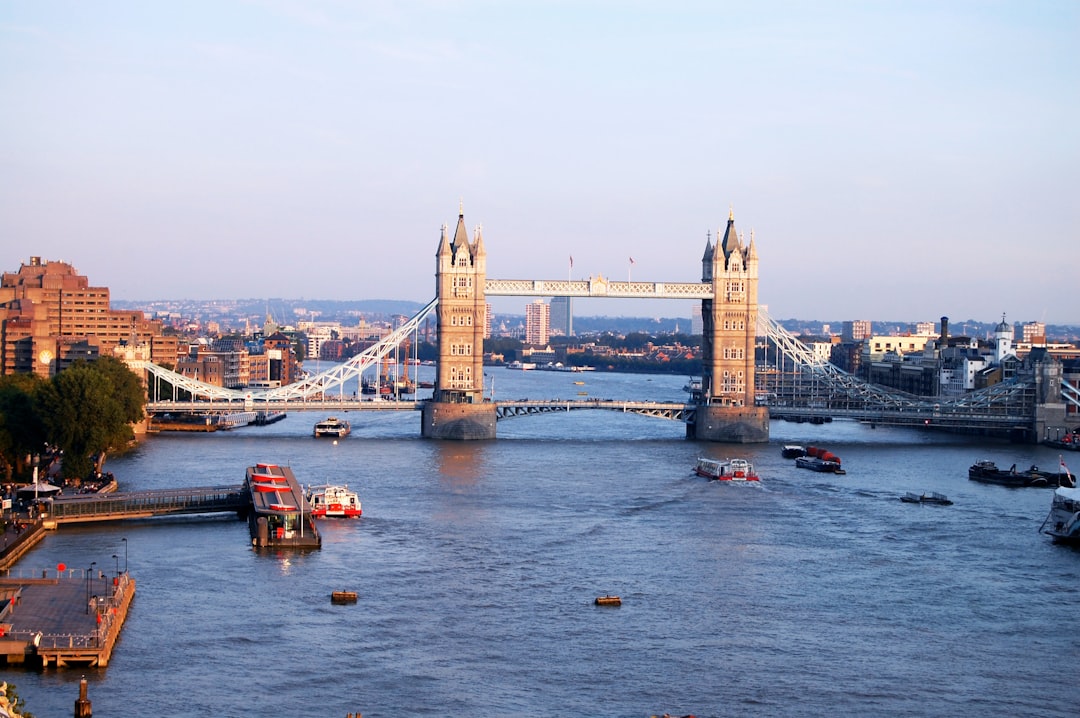
The history of London Bridge is a tapestry woven with the threads of time, stretching back to Roman Britain. The first iteration of the bridge was constructed around AD 50, serving as a vital crossing point over the River Thames. This wooden structure was a simple affair, designed primarily for military and trade purposes, facilitating the movement of troops and goods.
As the Roman Empire expanded, so too did the importance of this crossing, which became a focal point for commerce and communication. The bridge was rebuilt in stone during the late 1st century, a testament to its significance in the burgeoning city of Londinium. This stone bridge stood for several centuries, enduring the ravages of time and conflict, including Viking raids and the Great Fire of London in 1666.
As the centuries progressed, London Bridge evolved to meet the needs of a growing metropolis. By the Middle Ages, it had transformed into a bustling thoroughfare adorned with shops and houses, becoming a microcosm of London life. The bridge was not merely a means of crossing; it was a vibrant community in its own right.
The iconic medieval structure, completed in 1209, featured 19 arches and was lined with buildings, including a chapel dedicated to St. Thomas Becket. This version of London Bridge became emblematic of the city itself, often depicted in art and literature.
However, by the 19th century, the bridge was deemed inadequate for the increasing traffic demands of a rapidly industrialising London. This led to the construction of a new bridge, which opened in 1831 and was designed by John Rennie. It was this bridge that would eventually be replaced by the modern structure we see today.
Summary
- London Bridge has a rich history dating back to Roman times, with various iterations and reconstructions over the centuries.
- The architecture and design of London Bridge have evolved significantly, with the current structure being a modern marvel of engineering and design.
- London Bridge holds significant cultural significance in British literature and art, with numerous references in famous works and artistic depictions.
- As a tourist attraction, London Bridge offers must-see sights and activities, including stunning views of the River Thames and nearby landmarks.
- London Bridge plays a crucial role in British transportation and infrastructure, serving as a vital link for commuters and travellers.
The Architecture and Design of London Bridge
The architectural evolution of London Bridge reflects broader trends in engineering and design throughout British history. The original Roman bridge was a utilitarian structure, primarily focused on functionality rather than aesthetics. However, as architectural styles evolved, so too did the design of the bridge.
The medieval version, with its stone arches and timber-framed buildings, showcased the Gothic style that dominated the period. The bridge became an integral part of London’s skyline, with its distinctive silhouette becoming synonymous with the city itself. The 19th-century iteration of London Bridge marked a significant shift in engineering techniques.
Designed by John Rennie, this bridge was constructed using granite and featured five semi-elliptical arches. Its robust design was intended to accommodate the increasing weight and volume of traffic, reflecting the industrial age’s demands. The bridge’s design also included pedestrian walkways, allowing for safe passage across the river.
However, despite its sturdy construction, by the mid-20th century, it became clear that this version of London Bridge could not cope with modern traffic levels. In 1973, a new concrete and steel structure was completed, designed by architect Lord Holford and engineer Sir Peter Shepheard. This modern incarnation prioritises both functionality and aesthetics, featuring clean lines and an open design that allows for unobstructed views of the Thames.
The Cultural Significance of London Bridge in British Literature and Art

London Bridge has long been a source of inspiration for artists and writers alike, serving as a symbol of resilience and continuity in British culture. Its presence in literature can be traced back to Geoffrey Chaucer’s “The Canterbury Tales,” where it is mentioned as a notable landmark in medieval London. The bridge has also been immortalised in nursery rhymes, most famously in “London Bridge is Falling Down,” which reflects both its historical fragility and its enduring place in the collective consciousness of Londoners.
In art, London Bridge has been depicted by numerous painters throughout history. J.M.W. Turner captured its essence in his evocative landscapes, showcasing the interplay between light and water as he painted scenes along the Thames.
His works often highlight not just the bridge itself but also its role within the broader context of London’s ever-changing skyline. Additionally, contemporary artists have continued to explore its significance through various mediums, from photography to installation art. The bridge serves as a canvas for expressing themes of urban life, history, and transformation.
London Bridge as a Tourist Attraction: Must-See Sights and Activities
Today, London Bridge stands as a prominent tourist attraction, drawing visitors from around the globe who seek to experience its rich history and vibrant atmosphere. One of the must-see sights is the nearby Borough Market, one of London’s oldest food markets, where visitors can indulge in a diverse array of culinary delights. From artisanal cheeses to freshly baked bread and international street food, Borough Market offers a sensory feast that complements the historical significance of London Bridge.
Another highlight is The Shard, located just a stone’s throw away from the bridge. As Western Europe’s tallest building, it offers breathtaking panoramic views of London from its observation deck. Visitors can ascend to the 72nd floor and marvel at iconic landmarks such as St.
Paul’s Cathedral and Tower Bridge while gaining a unique perspective on the city’s layout. Additionally, guided walking tours often include stops at significant historical sites along the Thames, allowing tourists to delve deeper into the stories that have shaped London Bridge over centuries.
The Role of London Bridge in British Transportation and Infrastructure
London Bridge has played an integral role in British transportation since its inception. As one of the key crossings over the River Thames, it has facilitated not only pedestrian movement but also vehicular traffic for centuries. The original wooden structures were often limited in capacity; however, as London grew, so did the need for more robust infrastructure to support an expanding population and economy.
The modern incarnation of London Bridge is equipped to handle significant traffic volumes while providing essential links between various parts of the city. It serves as a crucial junction for road users and pedestrians alike, connecting Southwark with the City of London. Furthermore, it is an important hub for public transport; London Bridge railway station is one of the busiest in the capital, providing services to destinations across England.
This connectivity underscores London Bridge’s ongoing importance within London’s transport network and highlights its role as a facilitator of movement within one of Europe’s largest cities.
Famous Events and Incidents Involving London Bridge
Throughout its storied history, London Bridge has been witness to numerous significant events and incidents that have left an indelible mark on both local and national consciousness. One such event occurred during World War II when the bridge sustained damage from German bombing raids aimed at disrupting London’s infrastructure. Despite these attacks, London Bridge remained operational throughout the war, symbolising resilience amidst adversity.
In more recent times, London Bridge has been at the centre of tragic incidents that have tested the city’s spirit. The terrorist attacks in June 2017 shocked not only London but also resonated globally. A van was driven into pedestrians on London Bridge before assailants launched an attack on nearby Borough Market.
This incident highlighted vulnerabilities within urban spaces but also showcased London’s capacity for unity and strength in times of crisis as communities came together to support one another.
The Restoration and Renovation of London Bridge
The ongoing maintenance and restoration efforts surrounding London Bridge reflect a commitment to preserving its historical significance while adapting to modern needs. Over the years, various renovations have been undertaken to ensure that both structural integrity and aesthetic appeal are maintained. For instance, following extensive assessments in the late 20th century regarding wear and tear from heavy traffic loads, significant restoration work was initiated to reinforce key structural elements.
In addition to structural improvements, there have been efforts to enhance public spaces around London Bridge. Initiatives aimed at improving pedestrian access and creating green spaces have transformed areas adjacent to the bridge into vibrant community hubs. These enhancements not only serve practical purposes but also contribute to an enriched urban environment that celebrates both history and modernity.
The Future of London Bridge: Modern Developments and Preservation Efforts
Looking ahead, London Bridge is poised for continued evolution as urban development projects unfold around it. Plans for further enhancements include integrating smart technology into transportation systems to improve traffic flow and safety for pedestrians and cyclists alike. These developments aim to create a more sustainable urban environment while preserving the historical essence that makes London Bridge so iconic.
Collaborative initiatives between local authorities, heritage organisations, and community groups will ensure that any new developments respect the historical context while enhancing accessibility and usability for all who visit or live near this vital crossing point over the Thames.
London Bridge is a historic landmark in the heart of London, attracting tourists from all over the world. If you are planning a visit to this iconic bridge, you may also be interested in checking out a powerful tool for all designers featured on the London Pages website. And if you are thinking about creating your own website to showcase your work or business, be sure to read the article on how to build your own website easily for helpful tips and advice.
FAQs
What is the history of London Bridge?
London Bridge has a long and storied history, with the first bridge being built by the Romans around 50 AD. The current bridge, which opened in 1973, is the latest in a series of bridges that have spanned the River Thames at this location.
Is London Bridge the same as Tower Bridge?
No, London Bridge and Tower Bridge are two different bridges. Tower Bridge is located near the Tower of London and is known for its iconic bascule and suspension design, while London Bridge is a more traditional bridge located further upstream.
What are some interesting facts about London Bridge?
– The nursery rhyme “London Bridge is Falling Down” refers to the numerous times the bridge has been rebuilt or repaired throughout history.
– The previous London Bridge was sold to an American entrepreneur in 1968 and was later reconstructed in Lake Havasu City, Arizona.
– The current London Bridge is made of concrete and steel, and is designed to withstand the weight of modern traffic.
What are some attractions near London Bridge?
Nearby attractions include the Shard, Europe’s tallest building, Borough Market, a popular food market, and the HMS Belfast, a museum ship moored on the River Thames. The area also offers stunning views of the Tower of London and the City of London skyline.
Is London Bridge a popular tourist destination?
Yes, London Bridge is a popular tourist destination, attracting visitors from around the world who come to see the iconic bridge and explore the surrounding area. The bridge also offers stunning views of the River Thames and the London skyline.